
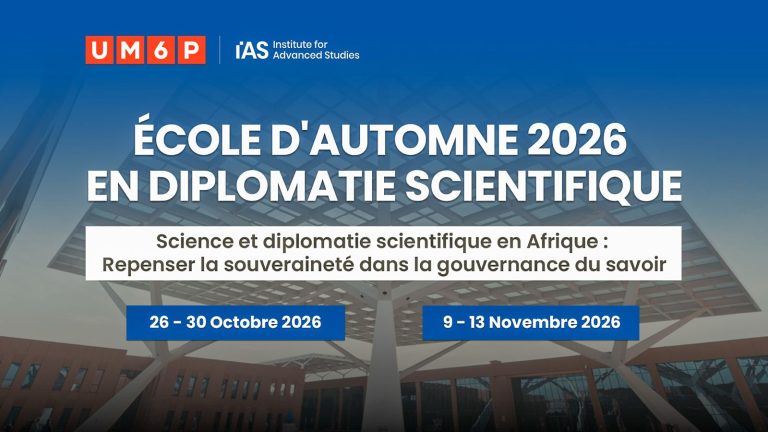
2026 Science Diplomacy Programme
A three-part IAS UM6P initiative led by Dr. Mounia Benalil, bringing together a hybrid learning lab, an online autumn school, and a diplomatic simulation on science diplomacy in African contexts.
 Current
Research Fellow in Residence
Québec, Canada
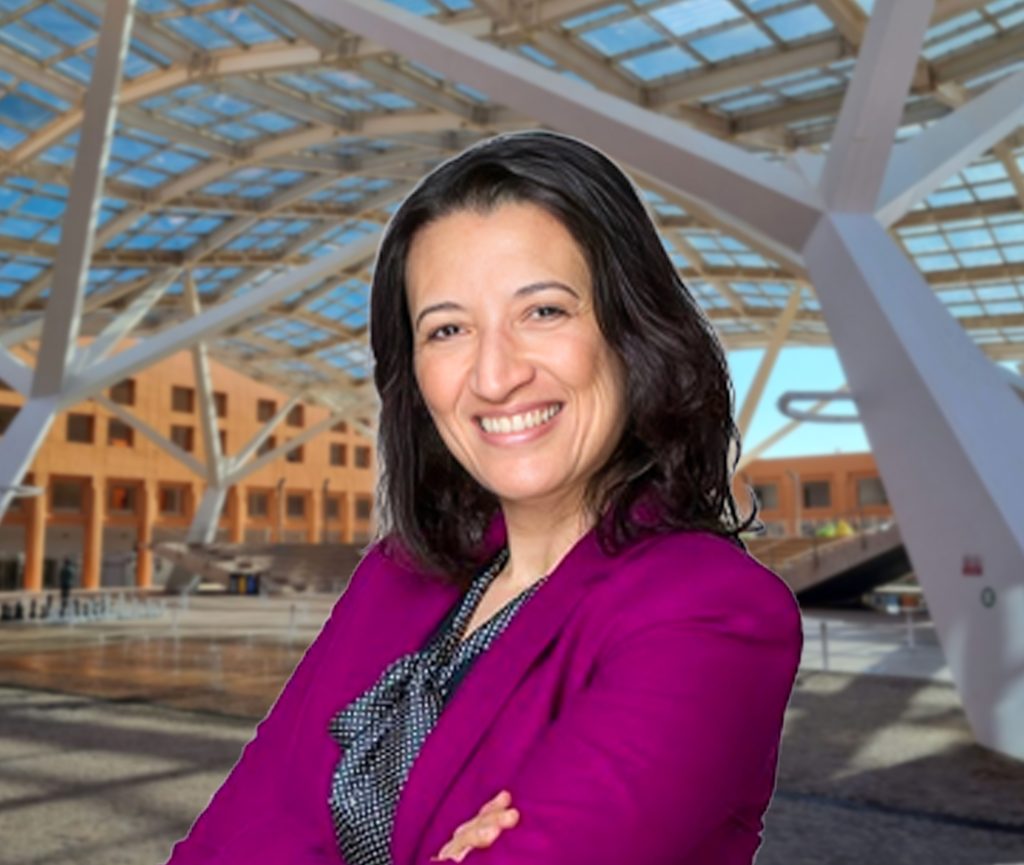
Dr. Mounia Benalil is a Research and Development Advisor and Research Associate affiliated with the École nationale d’administration publique and the Observatoire de la francophonie économique at the University of Montreal.
With more than two decades of experience in fundamental and applied research on major societal issues, her work focuses on the Francophonie in globalization, orientalism in Québec, parity in governance, diversity entrepreneurship, science diplomacy, and the relationship between knowledge production and public policy.
Her research has been supported by major Canadian funding institutions, including the Social Sciences and Humanities Research Council of Canada (SSHRC), the Fonds de recherche du Québec (FRQ), and the Secrétariat du Québec aux relations canadiennes (SQRC). Her work has also led to notable scholarly publications on postcolonial, intercultural and identity topics, as well as to the establishment of the first Living Lab dedicated to immigrant entrepreneurship in Québec.
A delegate to the Governor General’s Canadian Leadership Conference in 2022, Dr. Benalil develops an approach to cultural and scientific diplomacy centered on dialogue among researchers, public decision-makers, and field actors.
A three-part IAS UM6P initiative led by Dr. Mounia Benalil, bringing together a hybrid learning lab, an online autumn school, and a diplomatic simulation on science diplomacy in African contexts.
Dr. Mounia Benalil's residency project at IAS UM6P aims to design and test a science diplomacy framework adapted to Moroccan and African contexts, strengthening the connection between knowledge production and public action.
Through field experimentation, the project develops transferable approaches and tools to reinforce scientific governance and structure dialogue between science and public decision-making in Africa.
The residency is organized around three components:
1. Science Diplomacy Learning Lab
July 1-September 30, 2026 · Hybrid format
This learning laboratory combines in-person and online sessions on science diplomacy, geopolitics, evidence-informed diplomacy, soft power, global decision-making, universities and science diplomacy, African women scientists, and national/regional approaches to science diplomacy.
2. Autumn School in Science Diplomacy
Science and Science Diplomacy in Africa: Rethinking Sovereignty in Knowledge Governance
Block 1: October 26-30, 2026 · Block 2: November 9-13, 2026 · 100% online
3. Diplomatic Simulation
November 30-December 4, 2026 · In person, UM6P Benguerir
A multilateral negotiation of an African Charter for Open Science, led by Prof. Marie Fall (UQAC, Québec).