
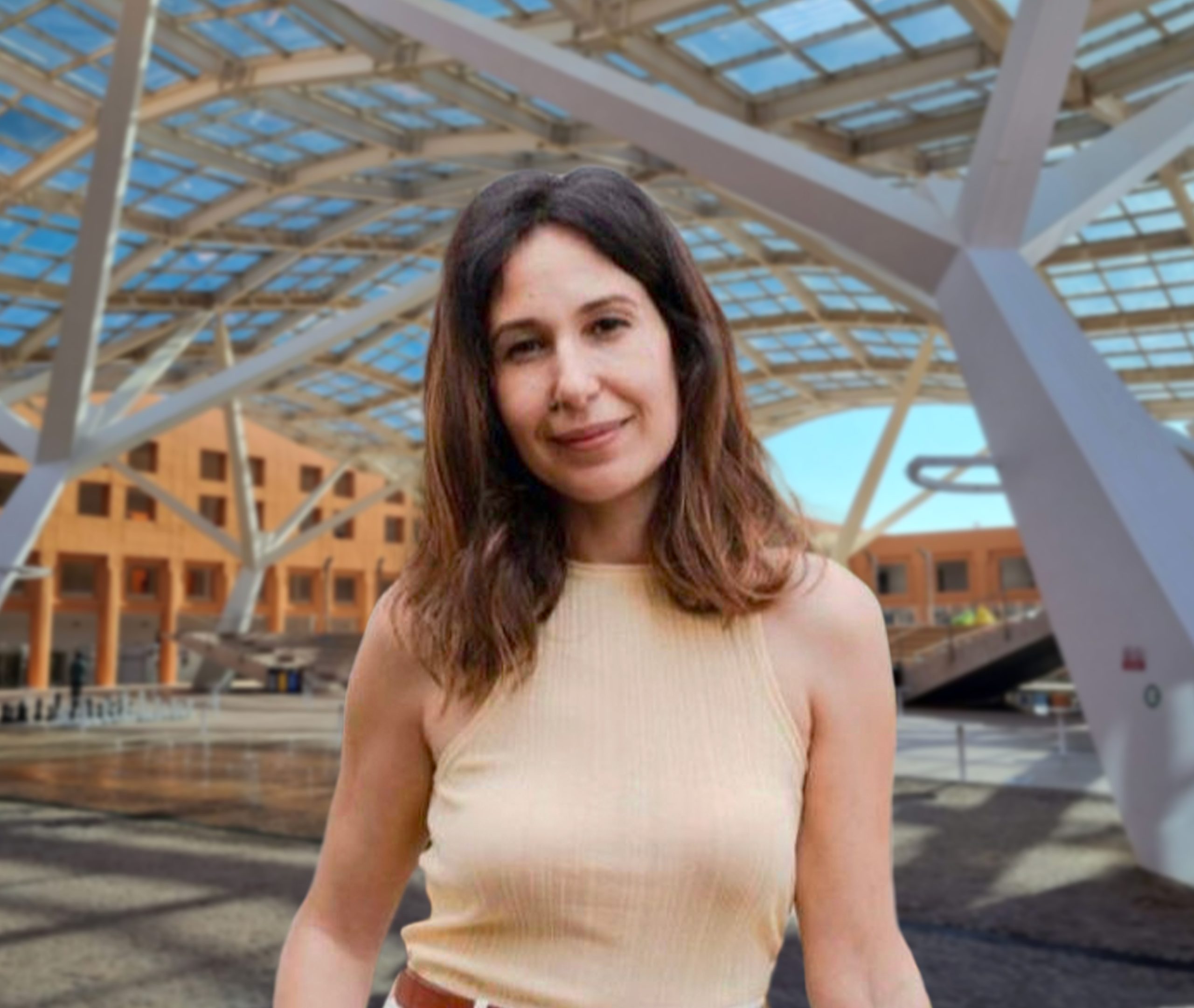
Rim Affaya is a postdoctoral researcher in anthropology at A*MIDEX (Aix-Marseille University, Centre Norbert Elias). She earned her PhD from the École des Hautes Études en Sciences Sociales (EHESS) in Marseille, where she conducted her doctoral research at the Centre Norbert Elias. Her work explores the intersections of material circulations, diasporic economies, and the contemporary commodification of cultural identities within Moroccan migratory trajectories.
Her research also engages with post-migration subjectivities, the materiality of cultural exchanges, and forms of diasporic female entrepreneurship across European spaces.
She is currently a fellow at the Institut Convergences Migrations in Paris, a member of MiMed (Thematic Network on Migrations in the Mediterranean), and part of the MOVIDA research network.
In June 2025, she was awarded the “Francophone Dissertation Prize on the Maghreb” in Strasbourg by the North Africa Regional Office of the Agence Universitaire de la Francophonie (AUF), in collaboration with the GIS Middle East and Muslim Worlds (GIS MOMM) and the Institute for the Study of Islam and Societies of the Muslim World (IISMM, EHESS-CNRS). The prize recognized her doctoral thesis entitled “Caftans, Camionnettes, and Banquettes: An Anthropology of the Commodification of Morocco in the Diaspora.”
Selected publication
“Four Demoiselles of Avignon: The Commodification of ‘Moroccan Marriage’ in Europe and the End of the Ethnic Subject” (Revue Européenne des Migrations Internationales, Vol. 37, No. 3–4, 2022, pp. 57–82)
Residency period
From September 2025 to July 2026.
Residency at IAS-UM6P:
During her residency at the UM6P Institute for Advanced Studies, anthropologist Rim Affaya develops the project “Mariage(s) au Maroc. Anthropologie d’un rituel en transformation.” The research investigates contemporary transformations of Moroccan wedding rituals, examining how they reflect evolving social norms, gender relations, economic practices, and cultural identities. Building on previous work on diasporic circulations between Morocco and Europe, the project approaches marriage as a “total social fact,” combining symbolic, economic, aesthetic, and political dimensions.
Through a multi-sited ethnography conducted in several locations—including Casablanca, Amsterdam, and the southern regions of Laâyoune and Dakhla—the project explores how wedding ceremonies function as spaces where identities, values, and aspirations are negotiated. Particular attention is given to material culture and professional practices surrounding marriage, such as clothing, objects, décor, and the work of key actors including negafas, stylists, photographers, and event organizers. The research also examines how rituals are reshaped by globalization, digital circulation, and diasporic influences, highlighting the tensions between tradition, modernity, and commodification.
Methodologically, the project combines participant observation, interviews, visual documentation, and comparative historical analysis, including a re-reading of early anthropological accounts of Moroccan marriage. It seeks to document how rituals become sites of distinction, consumption, and cultural reinvention, while also exploring their emotional, symbolic, and economic significance in a rapidly changing Moroccan society.
By integrating perspectives from anthropology, gender studies, sociology of consumption, and postcolonial theory, the residency contributes to broader debates on ritual transformation, heritage, and cultural economies. The project aims to produce an ethnographic monograph, scholarly articles, and public-facing outputs that bridge academic research, artistic collaboration, and societal dialogue, reinforcing IAS’s mission of fostering interdisciplinary inquiry into contemporary cultural and social transformations.