

04
Feb
2026
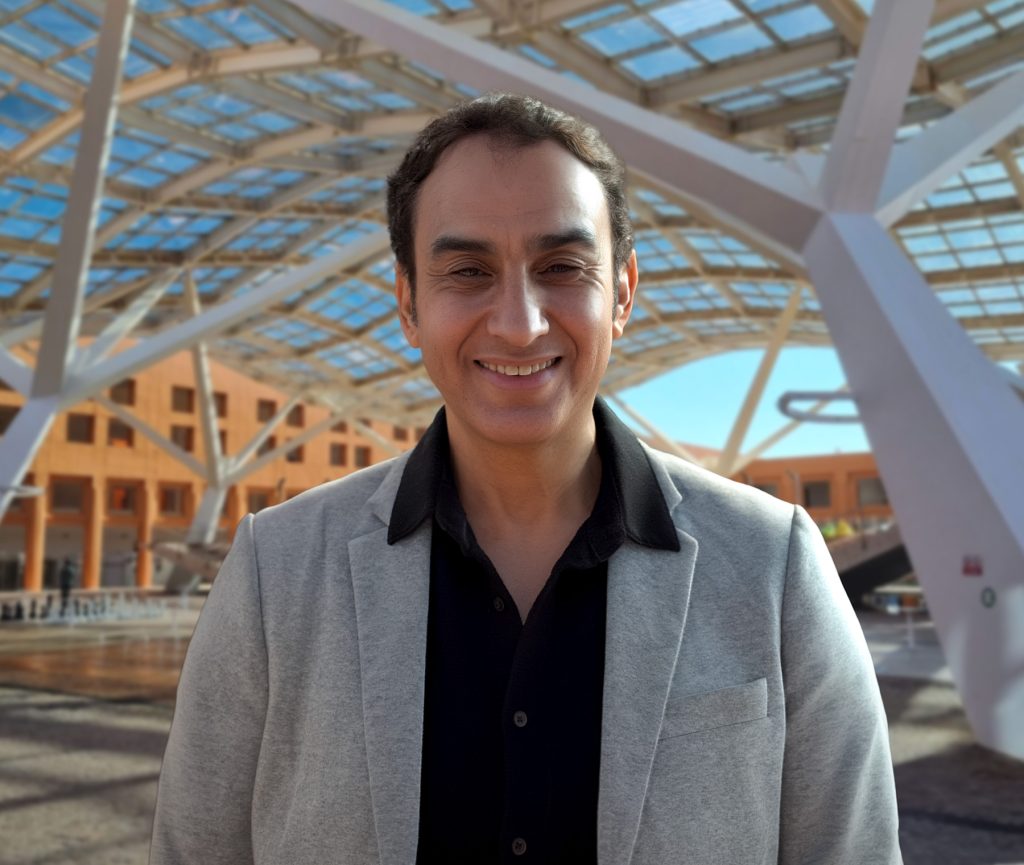 Guest Speaker
Biography
A French geologist, he completed his studies at the University of Lille 1 in France, where he obtained a PhD in geology and sedimentary geochemistry. He then carried out a two-year postdoctoral fellowship at the University of Kiel in Germany, supported by the prestigious Alexander von Humboldt Foundation. Over the course of his career, he has published more than one hundred scientific articles, several of which have appeared in leading international journals such as Nature, Science, and the Proceedings of the National Academy of Sciences (PNAS). He is also the author of three books of more than 200 pages each, focusing on the origins of life, the evolution of the biosphere, and ancient environments of planet Earth. His record in science communication and outreach is equally remarkable.
Leading an international research consortium, Prof. Abderrazak El Albani discovered macroscopic multicellular fossil life forms at a fossil site located in the Haut-Ogooué province in Gabon, known as the Franceville fossil group—a world first. In July 2010, this research was featured on the cover of the scientific journal Nature. The study of these fossils revealed for the first time the emergence of complex and organized multicellular life in Precambrian rocks dated to 2.1 billion years ago. This discovery pushed back the known emergence of multicellular life by 1.5 billion years, significantly reshaping our understanding of the evolution of the biosphere on Earth throughout the planet’s history. He had the honor of presenting this work during the International Year of Biodiversity at the United Nationsand at the American Museum of Natural History in New York in 2010, representing a major achievement for French scientific research at both national and regional levels.
In June 2024, together with his international team, he discovered a “marine Pompeii” dating back 515 million years in Morocco. This work appeared on the cover of the scientific journal Science. Being featured on the covers of these two of the most prestigious scientific journals in the world is extremely rare in a researcher’s career.
Deeply passionate and inherently curious, A. El Albani always emphasizes in his discoveries the importance of teamwork and thinking beyond conventional paths. According to him, it is essential to follow one’s intuition, think freely—without losing scientific rigor—and above all remain curious. Many of the most important discoveries of recent decades have been made outside established research paths, and the discoveries in Gabon are no exception, having been achieved outside formal research programs and with very limited resources.
In his daily work, his greatest pleasure lies in learning from others and discovering new perspectives across the world. As he often says: “If you are not passionate, you cannot do this profession, because the level of commitment it requires is immense.”
A. El Albani has continuously shared his knowledge with the wider public through national and international exhibitions (Vienna in Austria, Rabat, Marrakech, and soon the British Museum), as well as through scientific outreach programs for schools, particularly through the project “Sous les Pieds de Darwin” (“Under Darwin’s Feet”), and through lectures and interventions in secondary schools.
He currently coordinates an international consortium composed of 16 national and international institutions and serves as a scientific expert for several international research organizations. His contributions have been widely recognized: in 2016, he was awarded the title Chevalier des Palmes Académiques, and more recently, in July 2024, he was appointed Chevalier de la Légion d’Honneur, honoring the entirety of his scientific research and science outreach activities.