
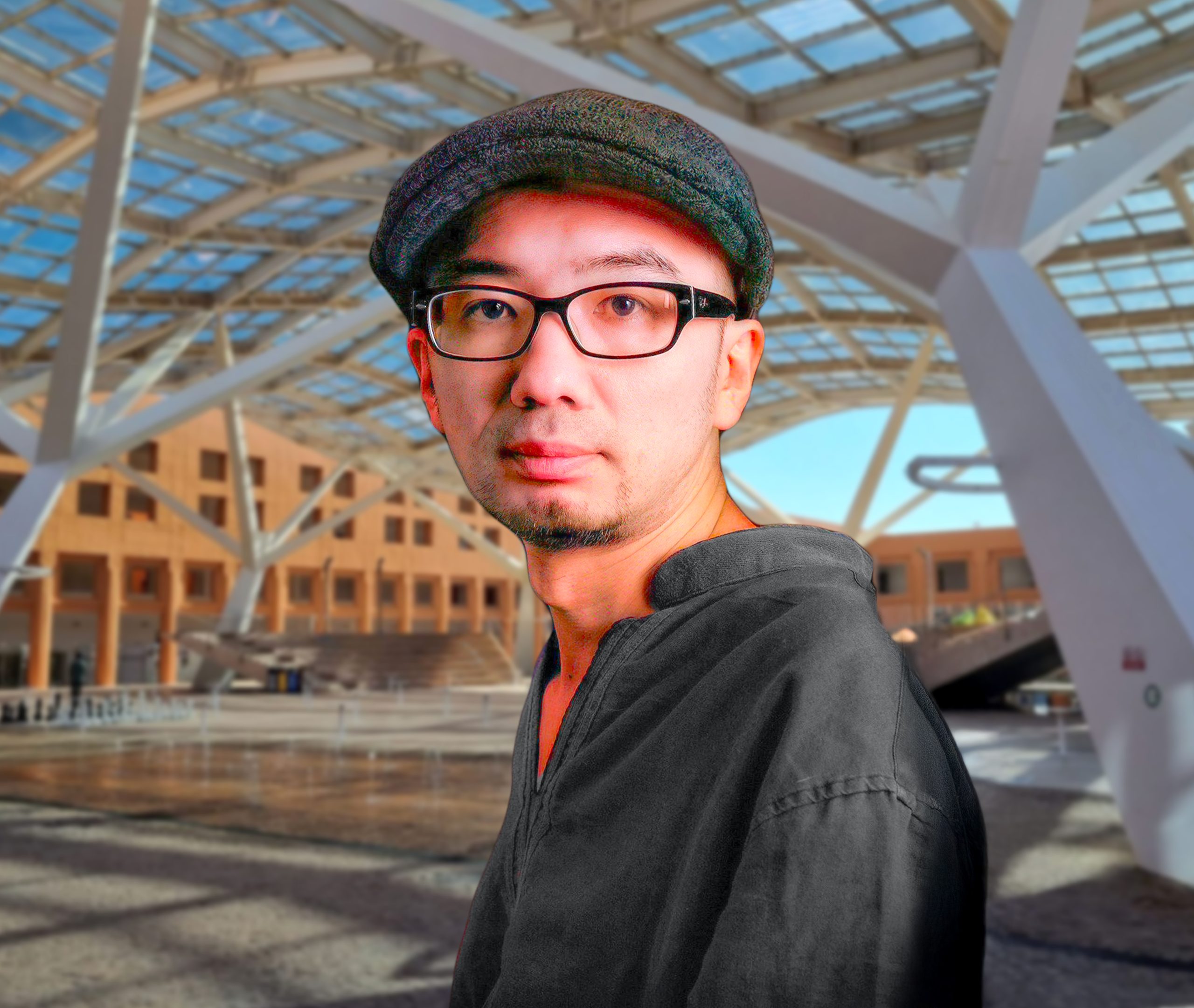
Naoyuki TANAKA, also known as NAO, is a Japanese-born digital artist based in France whose work explores the intersections of performance, robotics, and interactive environments. A graduate of the Beaux-Arts with a background in fine arts and programming, his practice fuses retro-futuristic aesthetics with philosophical inquiries into identity, conflict, and the human-machine relationship. Drawing on influences ranging from Japanese animism to 1980s pop culture, he creates immersive audiovisual performances and installations that challenge our perceptions of agency, ritual, and collective experience.
Recent International Performances
THE CLUSTERs (2025–2023) – Paris, Stuttgart, Ottawa, Casablanca
- PET’sOUND (2025–2024) – Paris, Casablanca, Khouribga
- MonkeyTURN (2014–2017) – Paris, Arles, Aix-en-Provence, La Motte-Servolex
- Venomous Master (2018) – Vision’R (Paris), Nuits Blanche, Technomancie
- UsiNER (2021–2023) – Marseille, Aix-en-Provence
Residency period
From September 2025 to December 2025.
Residency at IAS-UM6P:
During his residency at the UM6P Institute for Advanced Studies, Naoyuki Tanaka (NAO) developed W/ARGAME, an experimental performance project exploring the staging of conflict through robotics, sound, and immersive visual environments. The project took the form of a choreographed confrontation between two spherical robots interacting within a circular arena, where their movements dynamically influenced projection mapping and sound design.
Through this research-creation process, the residency investigated how combat can be understood as a ritualized spectacle rather than a purely violent act. By combining robotics engineering, algorithmic behavior, and performance art, the project examined how rules, choreography, and technological systems shape perceptions of competition, cooperation, and control. The robotic interaction created an immersive environment in which spectators became part of the staged confrontation, blurring the boundaries between observer and participant.
The residency period enabled the development of technical prototypes, movement algorithms, and scenographic concepts integrating robotics, audiovisual synchronization, and interactive staging. By bringing together artistic experimentation and technological research, the project contributed to interdisciplinary dialogue at IAS on performance, artificial intelligence, and the cultural representation of conflict in contemporary societies.