
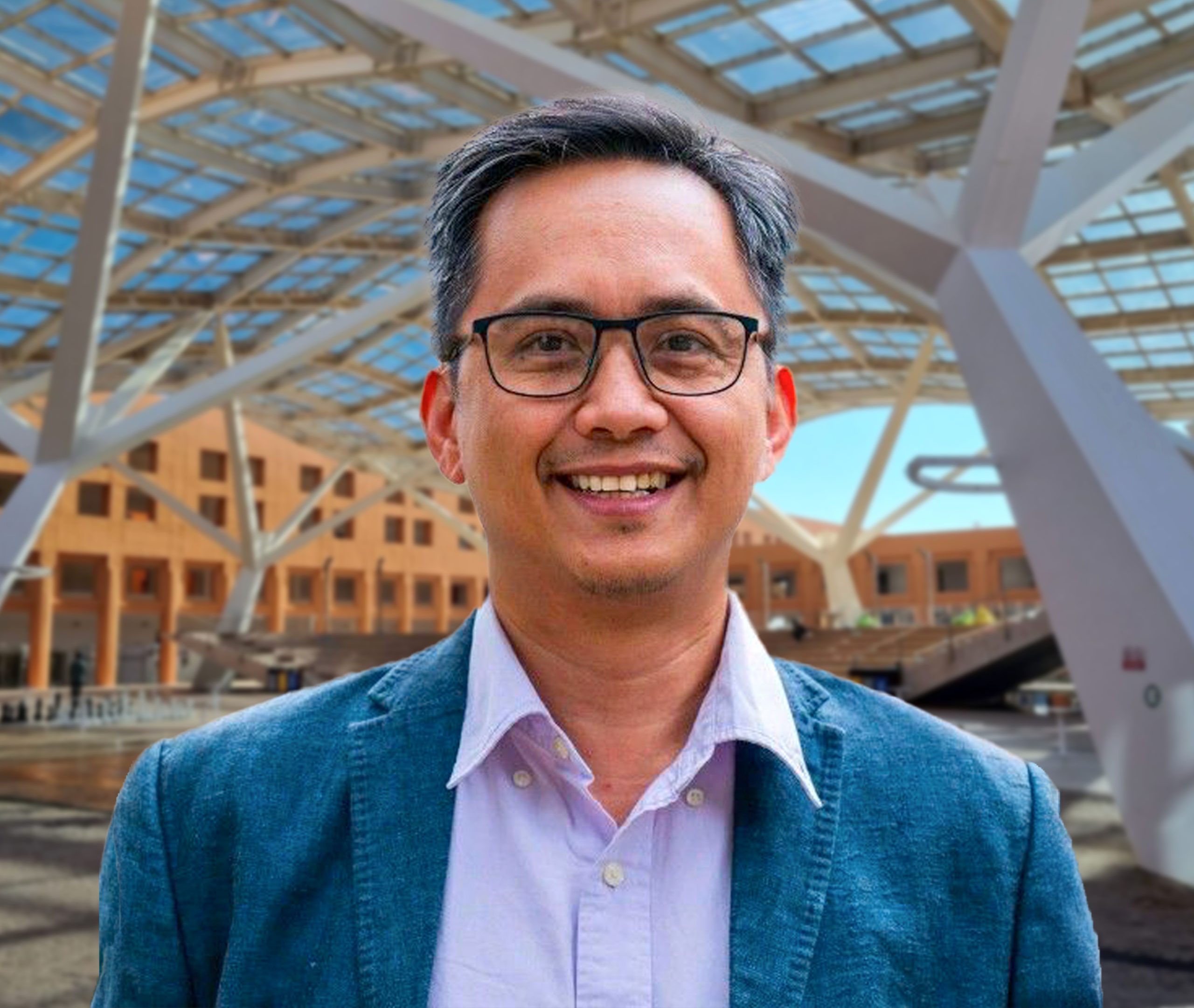
Prof. Anthony Halog is an internationally recognized scholar in circular economy, industrial ecology, and life cycle sustainability assessment. He is Associate Professor and Head of the Research Group for Industrial Ecology and Circular Economy at The University of Queensland (Australia). With more than 20 years of post-PhD research experience and over 130 publications, his work spans green chemistry, sustainable systems engineering, ecological economics, carbon footprinting, decarbonisation, and computational sustainability modelling. His interdisciplinary research integrates life cycle analysis (LCA), material flow analysis (MFA), systems thinking, and multi-criteria decision analysis (MCDA) to support transitions toward low-carbon, resource-efficient, and circular economies.
Academic Highlights
Selected publication
Advancing Integrated Systems Modelling Framework for Life Cycle Sustainability Assessment,
Halog, A., & Manik, Y. (2011). Sustainability, 3(2), 469–499.
Residency period
From April to May 2025.
Guest period at IAS-UM6P:
During his guest stay at the UM6P Institute for Advanced Studies, Prof. Anthony Halog joined IAS as a visiting scholar to initiate and strengthen interdisciplinary collaborations in the fields of circular economy, sustainable resource management, and life-cycle assessment. His visit focused on exploring research synergies between UM6P, OCP, and international partners—particularly the University of Queensland—around the sustainable transformation of phosphate value chains, fertilizer production, and circular agriculture in the context of global food security and the UN Sustainable Development Goals.
Throughout his stay, he engaged with multiple UM6P colleges, laboratories, and research centers to discuss collaborative projects related to green chemistry, industrial symbiosis, data-driven sustainability, and AI-enhanced research for resource efficiency. He participated in workshops and institutional events, delivered a research seminar, and held working meetings with faculty members, researchers, and doctoral students across disciplines. These exchanges aimed to develop joint research initiatives on life-cycle sustainability assessment, circular bioeconomy, and sustainable mining and manufacturing systems.
His guest period at IAS served as a platform for knowledge exchange and project incubation, helping to identify concrete avenues for long-term cooperation, joint publications, and future visits. It also reinforced IAS’s role as a hub for international collaboration on sustainability transitions, circular economy strategies, and interdisciplinary research addressing global challenges in energy, food, and resource security.