
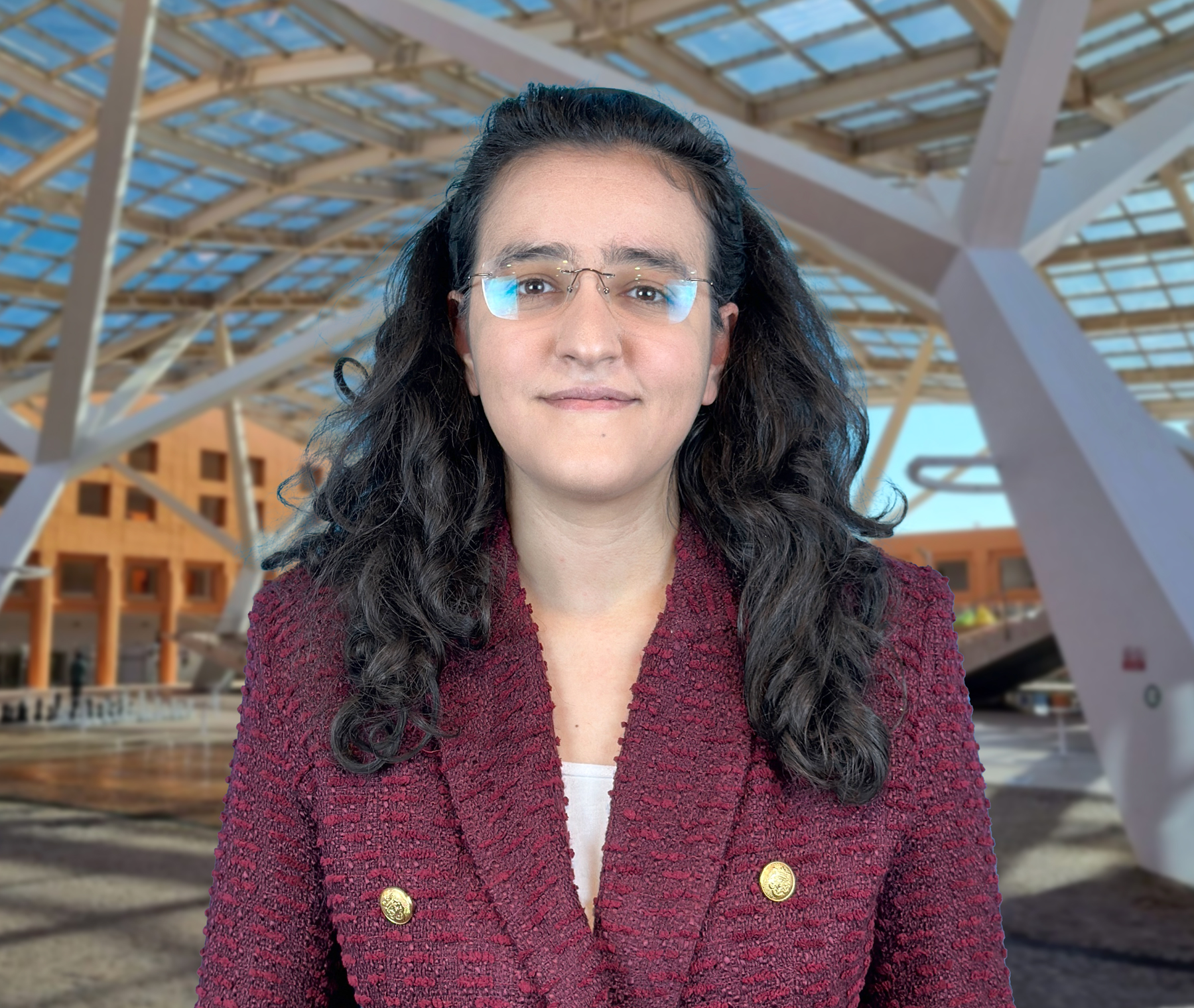
Dr. Hanane Yaagoubi, Ph.D. in Mechanical Engineering from Mohammed V University, specializes in Additive Manufacturing and 3D Printing. She is an Assistant Professor at Mundiapolis University, Casablanca, and a recognized innovator in her field.
Her achievements include the L’Oréal-UNESCO Maghreb Young Talent Prize (2023) and the AWAITAI African Women in Tech & AI Award (2024). She was among the top 15 research projects at the National Innovation Competition (2023) and won the Favorite Prize at CSMD (2020).
She also earned the Trophy of Distinction at IFA2021, was a semi-finalist in the INNOV.1 competition, and obtained student entrepreneur status from Mohammed V University. Actively engaged in national scientific events, she has participated in Smart Cities Plug & Play, SADV Hackathon, and various R&D initiatives.
Selected publication
Numerical simulation of heat transfer in the selective laser sintering process of Polyamide12, Laboratory of Applied Mechanics and Technologies (LAMAT), ENSET, STIS Research Center Mohammed V University, Rabat, Morocco
Residency period
From February 2025 to December 2025.
Residency at IAS-UM6P:
During her residency at the UM6P Institute for Advanced Studies, Dr. Yaagoubi led the project “Integrating 3D Printing to Optimize Key Components Essential for the Energy Transition.” The project explored how additive manufacturing and advanced materials can contribute to more sustainable and efficient energy and construction systems. Her research focused on developing and testing new materials and fabrication methods—particularly using local resources such as phosphate-based materials—to improve the mechanical performance and environmental sustainability of construction components and energy-related infrastructures.
The residency combined experimental work, modelling, and interdisciplinary collaboration with several UM6P laboratories and departments. It also examined the potential of 3D printing for applications such as renewable-energy devices, construction materials, and flexible manufacturing processes that support sustainable development goals. Through this work, the project aimed to position additive manufacturing as a strategic tool for innovation in the energy transition and in sustainable industrial practices.