
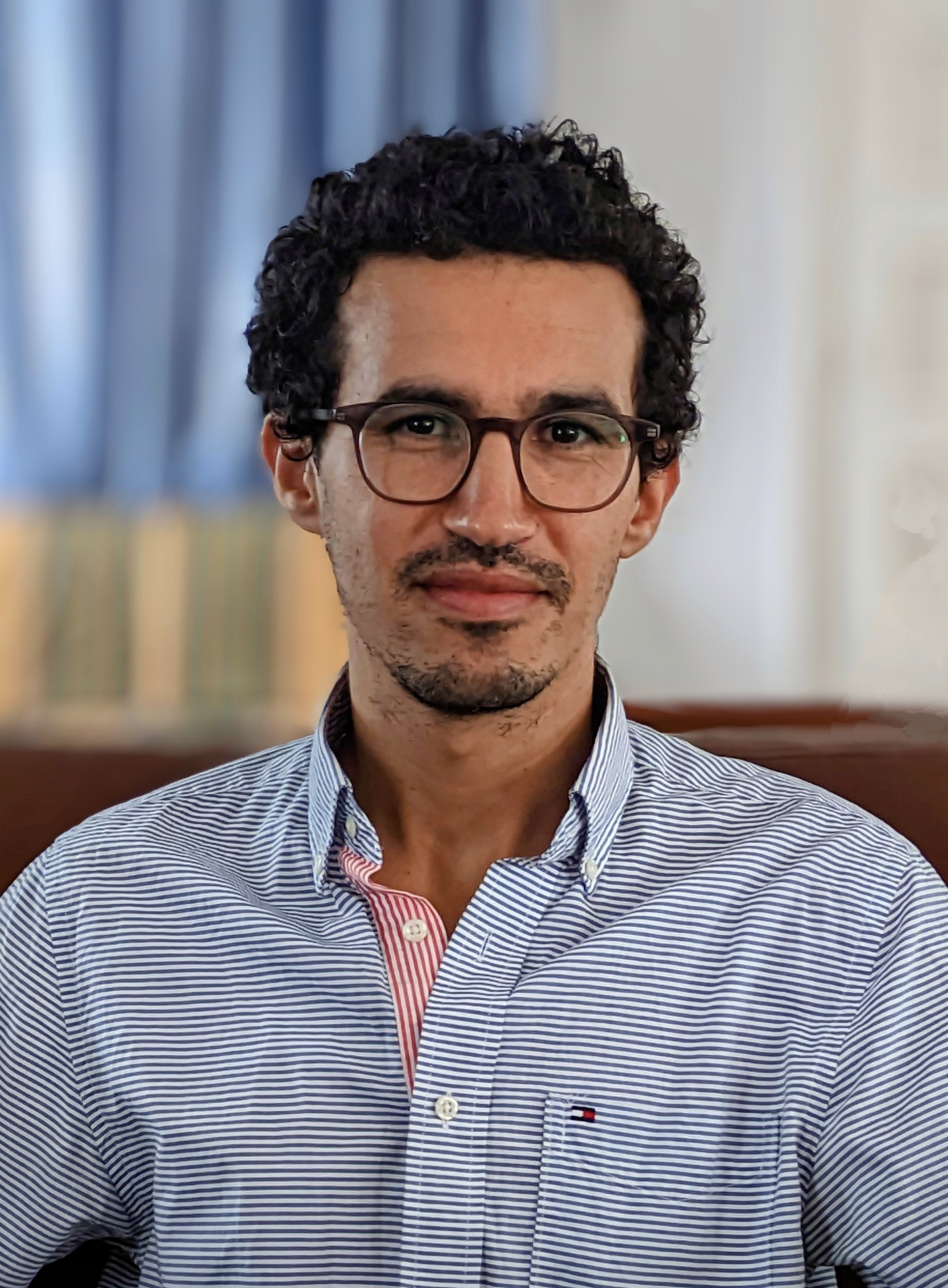
Montassir Sakhi is a distinguished anthropologist and associate researcher at KU Leuven (Belgium), known for his profound insights into the complexities of migration, conflict, and the global security landscape. His research has provided a critical understanding of the Syrian Revolution, counter-terrorism strategies, and the phenomenon of jihadist migration.
Selected Book
La Révolution et le Djihad (2023), published by La Découverte
Residency period
From October 2024 to August 2025.
Residency at IAS-UM6P:
During his residency at the UM6P Institute for Advanced Studies, anthropologist Montassir Sakhi conducted an ethnographic research project titled Parcours de migrations : un regard anthropologique et économique euro-africain, developed under the supervision of Prof. Pierre-Noël Giraud. His work examined contemporary migration dynamics between North Africa, sub-Saharan Africa, and Europe, with a particular focus on the social, psychological, and political dimensions shaping irregular migration trajectories. Combining anthropological and economic perspectives, the project investigated the formation of the “desire for the West,” the impact of increasingly restrictive border regimes, and the lived experiences of migrants and their families across Morocco, Tunisia, and European contexts. Through longitudinal fieldwork and interviews, Sakhi explored several interconnected dimensions: the experiences of families of migrants who have died or disappeared during migration journeys; the motivations and trajectories of candidates for irregular migration; the situation of educated middle-class migrants navigating visa regimes; and the conditions faced by sub-Saharan migrants in transit countries in North Africa. By centering personal narratives, collective memory, and the emotional and social consequences of border policies, the project aimed to produce both academic outputs and a research-based book contributing to broader debates on migration, mobility, and the human cost of contemporary border regimes.